
Legacy Power Factor Correction Systems in New Zealand: When Power Factor Correction becomes a Liability
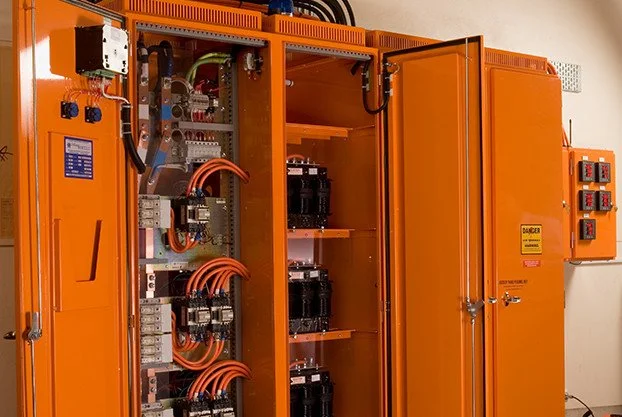
The $50k mistake hiding in your switchboard.
Many commercial and industrial facilities in New Zealand continue to operate capacitor-based power factor correction (PFC) systems that were installed more than a decade ago. In many cases, these systems remain in service despite significant changes to the site’s electrical load profile, including LED lighting upgrades, the introduction of variable speed drives, and broader energy-efficiency programmes.
This case study documents how a routine inspection at a Hawke’s Bay supermarket led to the identification of an unnecessary fire risk and the avoidance of approximately $50,000 in capital expenditure.
Background
New World Green Meadows operates under a structured facilities management regime that includes routine thermographic inspections, continuous energy monitoring, and scheduled preventative maintenance.
During one of these scheduled inspections, abnormal behaviour was identified in the site’s capacitor-based PFC system. Given the known failure modes associated with aging capacitor banks, the system was isolated as a precautionary measure.
At this point, the expected next step was a like-for-like replacement with a modern PFC system. Preliminary pricing indicated a capital cost of approximately $50,000.
Before proceeding, the site management requested confirmation that replacement was still necessary, given the extent of energy-efficiency upgrades completed since the original system was installed.
Investigation and Findings
Scope of Investigation
Rather than proceeding directly to replacement, a targeted power quality investigation was undertaken to establish whether the site still required power factor correction under current operating conditions.
The assessment focused on:
Real and reactive power flow with the PFC system temporarily in service and then isolated
Power factor performance across typical operating cycles
Harmonic distortion levels (current and voltage)
Critical Findings: Power factor correction was no longer required
Since the PFC system was installed, the site had undergone several major changes to its electrical infrastructure, including:
Replacement of legacy lighting with high-efficiency LED luminaires
Installation of variable speed drives on refrigeration plant
Broader upgrades to modern, electronically controlled equipment
These changes materially altered the site’s load profile. With the PFC system isolated, measured power factor remained within Unison’s thresholds across normal operating conditions. No penalties were incurred, and no adverse operational effects were observed.
Based on the measured data, the site no longer derived a financial or operational benefit from power factor correction.
The isolated system represented an avoidable fire risk
Capacitor-based PFC systems are a recognised ignition source, particularly as they age. Failure modes include internal heating, dielectric breakdown, and thermal runaway, which can occur even in environments with relatively modest harmonic distortion.
At this site, harmonic levels were measured below commonly referenced limits (THDi <8%, THDv <4%), and no immediate harmonic compliance issues were identified. However, the absence of a power factor correction requirement meant the system provided no benefit to offset its inherent risk.
From a risk management perspective, retaining an energized asset with a known failure mode and no operational benefit was not defensible. The system was therefore left permanently isolated.
Why this Situation is Common
Power factor correction systems are typically sized and installed based on the electrical characteristics of a site at a specific point in time. Over the past decade, those characteristics have changed substantially across most commercial facilities due to the widespread adoption of LED lighting, variable speed drives, and electronically controlled equipment.
In addition, many legacy PFC systems were not the result of detailed load studies or measured power factor analysis. Instead, system sizing was often based on rule-of-thumb estimates. A common approach was to assume that a facility required approximately one-third of its supply capacity in reactive power correction. For example, a site with a 1 MVA supply would frequently be fitted with a 300 kVAr capacitor bank, regardless of actual measured demand or load behaviour.
In many cases, this sizing was carried out during switchboard manufacture with limited site-specific data and little expectation of ongoing validation once the facility was operational. At the time, this approach was generally acceptable. Electrical environments were dominated by relatively simple inductive loads, and harmonic distortion levels were typically low.
In those conditions, an over or under-sized capacitor bank was not ideal, but it was rarely consequential. Even where detuning reactors were omitted or imperfectly matched, the operational and safety implications were limited.
That context no longer applies. Modern facilities contain a high proportion of non-linear electronic loads that generate significantly higher harmonic currents. In this environment, legacy PFC systems, particularly those sized using assumptions rather than measured data, are far more sensitive to incorrect sizing and detuning. What was once a tolerable design shortcut now represents a material reliability and fire risk.
As a result, total energy consumption may appear similar while the underlying electrical behaviour is fundamentally different. Replacing legacy correction equipment without reassessing the original assumptions often perpetuates both unnecessary capital expenditure and avoidable risk.
Insurance and Risk Considerations
While insurance policy wording varies, insurers are increasingly focused on the management of known ignition sources and expect asset risks to be actively assessed rather than passively maintained.
Legacy electrical equipment that has not been reassessed following significant changes to site operation can be difficult to justify after an incident. Even where no explicit exclusion exists, the presence of redundant, high-risk equipment creates avoidable exposure.
Removing such assets entirely is often a stronger risk position than maintaining or replacing them without clear justification.
Facilities are more likely to be in a similar position if they meet several of the following criteria:
Capacitor-based PFC installed more than ten years ago
LED lighting retrofits completed
Variable speed drives installed on major plant
An energy-efficiency programme has been implemented
No reassessment of power factor requirements since those upgrades
Outcome
The investigation resulted in the following outcomes:
A known fire risk was eliminated by permanently isolating redundant equipment
Approximately $50,000 in capital expenditure was avoided
Ongoing maintenance obligations associated with the PFC system were removed
The site retained the ability to reassess correction requirements if operational conditions change in the future
Had a standard like-for-like replacement proceeded, the site would have invested significant capital in equipment that provided no measurable benefit.
What this means for you
Before replacing or refurbishing capacitor-based PFC equipment, the necessity of correction should be verified under current operating conditions.
A targeted power quality assessment can:
Confirm power factor performance with correction offline
Identify exposure to utility penalties
Compare current load behaviour with original design assumptions
Identify any genuine power quality risks requiring mitigation
Such assessments are typically completed within a week and cost a small fraction of a full system replacement.
In this case, the most valuable outcome was not an equipment upgrade, but the identification of equipment that was no longer required.
A short, focused investigation eliminated a fire risk and prevented unnecessary capital expenditure. A default replacement would have achieved neither.
Before approving replacement of legacy electrical infrastructure, it is worth confirming that the original problem still exists. In many modern facilities, it does not.
Could your site have hidden electrical risks?